

Abstract
This study examines the perception of not owning a red book (title deed) in terms of social and urban integration in the shantytown areas of Bishkek. The research was conducted in four of the 47 neighbourhoods located on the outskirts of Bishkek. A combination of quantitative and qualitative research methods was employed, encompassing surveys (416), interviews (25), and observational techniques. This janykonushes (slum) study reveals that a certain population living in informal settlements, due to their lack of official status, does not have adequate access to basic services such as education, healthcare, infrastructure (transportation, water, electricity, etc.), security, environmental health, and social amenities (children's parks, green spaces). The field study revealed that the absence of a red book results in public exclusion and delays social integration in the city. It was concluded that the government and local authorities must work within a programme framework to find solutions related to informal settlements in order to integrate Janykonushneighborhood residents into the city. The longer solution-oriented policies and practices are delayed, the greater the risk that the integration problem will grow and become entrenched.
Öz
Kırgızistan’da Kentleşme ve Sorunları: Bişkek Örneği
Bu çalışma, Bişkek kentindeki canıkonuş (gecekondu) bölgelerinde kırmızı kitap (tapu) sahibi olmamanın toplumsal ve kentsel bütünleşme üzerindeki etkilerini incelemektedir. Araştırma Bişkek kentinin kenar mahallelerinde kurulan 47 mahallenin 4 mahallesinde gerçekleştirilmiştir. Araştırmada, hem nicel hem de nitel yöntemle, anket (416), mülakat (25) ve gözlem teknikleri kullanılmıştır. Bu Canıkonuş araştırmasında, gayriresmî yerleşim yerlerinde yaşayan belli bir nüfusun, resmî statülerinin olmaması nedeniyle eğitim, sağlık hizmetleri, altyapı (ulaşım, su, elektrik vb.), güvenlik, çevre sağlığı ve sosyal olanaklar (çocuk parkları, yeşil alanlar) gibi temel hizmetlerden yeterince yararlanamadığını ortaya koymaktadır. Saha çalışması sonucunda, kırmızı kitap eksikliğinin kamusal dışlanmaya neden olduğu ve bu durumun kentte toplumsal bütünleşmeyi geciktirdiği ortaya koyulmuştur. Canıkonuş mahalle sakinlerinin kentle bütünleşmesi için gayriresmî ikametlerle ilgili hükûmetin ve yerel yönetimlerin bir program çerçevesinde çözüm odaklı çalışması gerektiği sonucuna varılmıştır. Çözüm odaklı politika ve uygulamalar ne kadar gecikirse bütünleşme sorununun da o derece büyüyeceği ve katılaşacağı tehlikesi söz konusudur.
Article Text
Introduction
Located in the Chuy region of Kyrgyzstan, Bishkek has held great importance for the Kyrgyz state from the Middle Ages to the present, serving successively as a fortress, an administrative centre, and ultimately the capital of the country. During the Soviet Union, three administrative districts were established on October 1, 1938, in what was then known as Frunze: Proletarsky, Pervomaysky (Birinchi May), and Sverdlovsky. In 1962, the Proletarsky district was renamed the Lenin district. Later, on January 9, 1974, by the decision of the Supreme Council of the Kyrgyz Soviet Socialist Republic1, the fourth district of the city Oktyabr was established.2 Following Kyrgyzstan’s independence in 1991, the capital known as Frunze during the Soviet period was renamed “Bishkek” as part of the process of constructing a national identity.3 The renaming of the city is an important indicator of post-independence national identity reconstruction (Soyak 107). Bishkek was administratively divided into four districts - Oktyabr, Birinchi May, Sverdlov, and Lenin -and this structure has been preserved to this day.
Nowadays, Bishkek is surrounded by numerous janykonush (squatter settlement) areas where various social problems are concentrated. Janykonush means 'shantytown' or 'squatter settlement' in Kyrgyz.4 Some of these janykonush are directly affiliated with the Bishkek Municipality, whereas others are located within the administrative boundaries of the Chuy region. According to data from the Bishkek Municipal Public -State Department of Capital Construction, the number of janykonush under municipal authority was 47 as of 2022 (Orçan and Karaeva). These settlements are situated within or around the boundaries of Bishkek’s four districts. However, according to the updated data from the Bishkek Main Department of Architecture as of June 2023, there are 57 janykonush neighbourhoods within the administrative borders of Bishkek.5 Furthermore, by presidential decree dated December 29, 2023, within the framework of a pilot implementation, certain village administrations and newly established settlements previously affiliated with the Alamudun and Sokuluk districts of the Chuy region were officially incorporated into the borders of Bishkek (President Kyrgyzskoy Respubliki).
According to Eshenkulova (242), the formation of illegal settlements around Bishkek occurred in three waves. The first wave emerged in the late 1980s during the Soviet period due to housing shortages; it began with the occupation of vacant agricultural lands and was officially recognised by the state in 1989. The second wave developed in the 1990s following independence, during the processes of agricultural reform and land privatisation. The third and largest wave occurred before and after the 2005 “Tulip Revolution” and the political protests of 2010.
The events referred to in the literature as the “Tulip Revolution” symbolised not only a change in political power in Kyrgyzstan but also the beginning of a broader social transformation. Although the revolution began in provincial regions and quickly reached to the capital, it was triggered by widespread dissatisfaction with elections; however, it gained deeper meaning from the accumulation of structural problems shaped along the North–South axis. Following the revolution, lands around Bishkek began to be occupied on a massive scale (O’Beachain et al., cited in Isabaeva, 249).
When the establishment dates of janykonush (squatter or slum) settlements around the city are examined, the earliest examples include Madaniyat (1988), Orok (1988), Yntymak–Archa Beshik (1988), and Aska Tash (1989). Other settlements founded in 1989 and 1990 include Altyn Beshik, Kolmo, Kasym, Burdinskaya–İlmenskaya, Salam-Alik, Ak Orgo, Bakay-Ata, Kelechek, Ene-Sai, Ak Bosogo, Ak-Tilek, Dachnaya–Suvorova–BCHK, and Kok Zhar. In the post-independence period, particularly between 1991 and 2005, janykonush settlements such as Archa Beshik (1991), Keremet (1997), Ala Too (1998), Dordoy (2000), Kara Zhygach (2000), Uchkun (2000), Ak Bata (2002), Kalys Ordo (2002), Profsoiuznaya (2002), Ak Tilek-2 (2002), and Karalaeva (2003) were established. After the Tulip Revolution, new settlements such as Zhenish, Muras Ordo, Tynchtyk, Sherbakova, Ak Ordo, Kut, Kaiyndy, Keramicheskaya, Ak-Tilek-3, Altyn-Ordo, and Ruhiy Muras emerged. Settlements founded during this period face more intense social problems than earlier ones. Additionally, in the post-Tulip Revolution period, new janykonush settlements such as Krasnyi Stroiytel (2006) and Uchastok Mendeleeva (2007), were established (Municipal Administration of the Bishkek Mayor’s Office for the Lenin Administrative District). Kolkhozes were collective agricultural production cooperatives established by peasants during the Soviet Union. Sovkhozes, on the other hand, were agricultural enterprises directly established and managed by the state during the Soviet Union. Both systems were established, particularly from the 1930s onwards, to integrate the rural population into a centralized production structure. Following the collapse of the Soviet Union in 1991, the kolkhoz system was abandoned and replaced by a liberal system.a wave of migration to Bishkek began. The collapse of kolkhozes and sovkhozes in rural regions increased unemployment. This process forced the young population living in villages to migrate to cities where employment opportunities were more abundant (Salmorbekova 180). Over the past 15–20 years, significant internal migration has occurred from various regions of the country to Bishkek and the Chuy region; a large proportion of these migrants settled in janykonush areas due to relatively low housing prices (Derbisheva).
Janykonush represents peri-urban settlements inhabited by socially and economically under-integrated populations detached from rural contexts. Over the past 10–15 years, these areas have experienced severe socioeconomic and cultural marginalization in sociological terms. Scientifically, identifying aforementioned problems on-site and gathering data to get reliable and valid findings for the practical solutions are of critical importance. By comprehensively examining the field, this research aims to provide a fresh contribution to the existing literature on Bishkek Janykonush and to determine the current stage reached by these sociological problems.
Studies on Janykonush Settlements
In the janykonush settlements surrounding the capital, Bishkek, complex problems are experienced in sociocultural, economic, political, and legal domains. Rather than being resolved over time, these problems have generated additional challenges. Information regarding janykonush can be grouped into three main categories:
- News reports and analyses in mass media
- Reports prepared through partnerships among national and international organisations, think tanks, research centres, and civil society organisations
- Academic research
News articles and media coverage in online and print outlets frequently aim to make the problems and voices of janykonush residents visible. Numerous sources related to janykonush are accessible through digital platforms and media institutions. Social problems, such as the inadequacy of healthcare and educational institutions, security concerns, poor road conditions, environmental issues, deficiencies in drinking water and electricity infrastructure, and title deed problems are frequently highlighted (Isabaeva). Protests organised in this context have also been conveyed to the public through the media.
Reports prepared by national and international organisations also provide important assessments of janykonush areas. These reports indicate that crime rates are significantly higher compared to the city centre; fraud, theft, and pickpocketing rank among the most common forms of victimisation (UNODC, Rezultaty). Difficulties in accessing education are too complex to be explained solely by poverty. A 2015 UNICEF study, based on 276 out-of-school children, identified multiple contributing factors, including parents’ education levels, unemployment, distance to school, and lack of appropriate clothing.
From a spatial perspective, the exclusion experienced by janykonush settlements is further deepened by deficiencies in public transportation infrastructure. In settlements such as Ene-Sai, the lack of adequate bus stops restricts access to education, healthcare, and employment opportunities, thereby reinforcing social exclusion (Derbisheva). The inability of buses and trolleybuses to serve these areas due to poor road conditions further complicates their integration into the city (Bekmambetova and Sasykulov). Similarly, in the field of healthcare, janykonush residents face significant access barriers due to poverty, lack of registration, and transportation constraints, they generally seek medical services only in emergency situations (WHO/DFID).
The development of community-based security models offers promising prospects for addressing safety concerns by strengthening cooperation among local residents, police, and municipalities (UNODC, Obshchestvennaya). Conversely, negative social attitudes such as the stigmatisation of migrants as “occupiers”—and health risks associated with stove use during winter months further undermine both the well-being and social cohesion of janykonush residents (European Economic Commission). Thus, these studies are multidimensional in nature, highlighting the importance of ensuring janykonush residents’ access to urban citizenship rights and essential services such as education, healthcare, transportation, and security.
From an academic perspective, research on the topic has been conducted at different times. Eliza Isabaeva examines how janykonush settlements were established and the social problems resulting from their informal status. According to her findings, following the 2005 Tulip Revolution, individuals known as “topbashy,” who were connected to certain officials, seized state-owned agricultural lands and distributed or sold these lands to relatives and fellow villagers. The term "topbashy" used in Isabaeva's work carries negative connotations in Turkish, meaning "group leader," and is described among the residents of janykonush as individuals connected to the state who engage in illegal land distribution, often associated with negative images such as "mafia" or "shadow state."
Using the example of the Kızıl Zher Janykonush, Isabaeva categorises residents into three groups: (1) “topbashy” or officials associated with them; (2) “occupiers” who settled after the 2005 Tulip Revolution; and (3) those who purchased houses around Bishkek and settled there. Her field research emphasises residents’ statements that they had been living for six years without electricity and water services in freezing winter conditions.
Rita Salmorbekova emphasises that after Kyrgyzstan gained sovereignty, the suspension of former collective farms (kolkhozes and sovkhozes) between 1991 and 1994 triggered intense internal migration to Bishkek. She notes that unemployed migrants, facing housing shortages, began occupying land around cities such as Bishkek and Osh and continued their lives without settling in city centres. In her study, 58.5% of participants stated that they did not perceive themselves as residents of Bishkek.
Eshenkulova focuses on the emergence of unplanned, uncontrolled, and infrastructure-deficient janykonush settlements in Bishkek following the dissolution of the Soviet Union in 1990. She underlines that weaknesses and systemic instability in the country’s governance during the early years of independence played a significant role in the formation of such settlements. Kubat Otorbaev presents the framework of national and international housing rights, this study addresses squatter-related problems faced by janykonush residents. Otorbaev emphasises that the illegal construction of shanty houses negatively affects residents’ living conditions. This situation prevents access to essential infrastructure services such as safe drinking/potable water, sewage systems, waste management, and electricity and fails to ensure safe and adequate housing conditions.
Moldokerimova and Dogan provide a comparative analysis of two shantytown areas in Bishkek. The study examines two settlements established in 2005 through the occupation of state lands by internal migrants: Chalbai which holds official shantytown status and was formalised in 2008, although infrastructure and services remained incomplete until 2011, certain basic public services were provided by the municipality and Ak Zhar, which lacks official status,
Nazira Tulendieva explains that socially marginalised groups in the city reside in janykonush areas, where they experience social exclusion alongside poverty and inadequate access to electricity, drinking water, and sewage systems. Overall, existing studies demonstrate that post-independence economic instability, intense internal migration, unemployment, and political events laid the groundwork for the emergence of janykonush settlements. These dynamics have deepened unplanned urbanisation, infrastructure deficiencies, poverty, crime, and unemployment. While this study shares certain problem areas with previous research, it is significant as the first postgraduate-level janykonush study conducted using sociological concepts and scientific methodology. By examining the processes of social integration and the factors influencing public and social exclusion, it offers an original contribution to the literature.
In particular, the study evaluates the phenomenon of social exclusion within public and cultural contexts, analysing which existing paradigms of social exclusion (e.g., normative or structural approaches) it most closely aligns with. This perspective distinguishes the research from previous studies by examining social perceptions and the factors that deepen social problems and by presenting a new viewpoint supported by empirical data.
Urban Integration and Social and Public Exclusion
When a population group encounters another group within a particular settlement area, various difficulties may initially arise in relations and behaviours between newcomers and established residents. This situation can lead to processes such as pushing away, segregation, marginalisation, exclusion, and othering; as a result, social integration becomes more difficult. The positive trajectory of these processes is referred to as urban integration. The intensity of urban integration—or lack thereof—varies according to ethnic, religious, cultural, economic, and class differences; the temporal priority of settlement; spatial location; and ethnographic, educational, and economic characteristics.
In cities, migration often begins as dispersed inflows from outside, followed by clustering in peripheral areas. Over time, partial concentrations emerge based on economic, cultural, and hometown ties. Migrants attempt to establish themselves in the city. At this point, the process of “holding on” and the challenges experienced therein directly affect urban integration and shape patterns of belonging to the city. Based on rural-to-urban migration, the condition of failed integration—particularly evident in large cities—has been conceptualised as rural metropolization (Orçan 215–216). Rural metropolization refers to a transitional urban condition in which the wealthy and the poor, the educated and the less educated, employers and workers, skyscrapers and squatter houses, and urban-origin and rural-origin populations live side by side. Despite significant differences in production and consumption opportunities and habits, they are compelled to share the same neighborhood. At this juncture, what we call social exclusion emerges. Extreme differentiation rooted in education, culture, and economic status—in short, class and lifestyle—can make social exclusion inevitable. Consequently, rural-origin populations develop new psychological orientations, search for alternative strategies, and strive to adapt and survive in the city.
Urban integration has significant dimensions that shape whether urban problems are resolved or persist over time. For the analysis of this study’s data, the framework proposed by Haas, Castles, and Miller—who conceptualise urban integration in three dimensions: cultural, political, and social—has been found particularly useful. Cultural integration includes mastering the language of society, adopting its values, and developing a sense of belonging. Political integration encompasses participation in civil society organisations, such as professional unions and associations, involvement in political parties, the right to vote, and engagement in electoral processes. Social integration includes learning and using the language of the city, intermarriage between different groups, and the frequency of encountering or committing crime.
In addition to these three dimensions, Searle and Ward (449–464) refer to psychological and economic adaptation. In this study, the problem of urban integration in the janykonushes of Bishkek is examined primarily through class-based, economic, spatial, political, infrastructural, educational, healthcare, and broader social disparities and deficiencies.
Prominent representatives of critical urban theory, such as Henri Lefebvre (The Production) and David Harvey (Consciousness and the Urban Experience 13), argue that cities are increasingly commodified. By the very nature of the capitalist system, genuine integration within cities becomes unattainable, as cities constitute key arenas for capital accumulation and class struggle. Rather than fostering integration, the existing system produces—and reproduces—segregation, heterogeneity, and inequality. True integration is widely contingent upon the institutionalization of fundamental claims among which the most notable one is the right to the city. Findings of this study demonstrates that the janykonush settlements of Bishkek exhibit rights-based impediments precluding the civic incorporation of their residents.
In settlements where urban integration constitutes a serious problem, residents inevitably confront the phenomenon of social exclusion. Social exclusion may be briefly defined as the inability of certain individuals and groups to access the civil, political, economic, and social rights that enable integration into society (Walker and Walker 8). In contexts where disparities exist between those who can and cannot access services and opportunities, those who can sustain an average standard of living and those who cannot, or those who can maintain daily life and those who struggle to do so, specific individuals and groups experience problems of urban integration and face social exclusion.
Public exclusion, by contrast, refers to a more macro-level form of exclusion that is largely beyond the control of individuals and difficult to overcome. Exclusion arising from poverty may, at least theoretically, be mitigated through increased work or income. However, the absence or insufficiency of neighbourhoods, housing, roads, water, electricity, sewage systems, schools, and healthcare facilities constitutes a structural problem that individuals and households cannot resolve on their own. ‘Public exclusion’ thus emerges as a sociological and social policy issue rooted in governance deficiencies or inadequacies. Individuals and households facing public and social exclusion may experience alienation, disconnection, deprivation, and marginalization factors that further obstruct urban integration (Karaeva 239).
Research Method and Technique
This study employs a mixed-methods design, integrating both qualitative and quantitative approaches. The primary rationale for this choice is to enable a more comprehensive and reliable analysis of the data, allowing each method to complement the limitations of the other and thereby providing a deeper and more nuanced understanding.
Qualitative data were collected through face-to-face interviews using a semi-structured questionnaire designed to explore participants’ demographic characteristics and levels of urban integration. Interviews were conducted with 25 participants—13 women and 12 men—with at least six households representing each of the four selected neighbourhoods. Participants were selected through purposive sampling, ensuring balanced representation across neighbourhoods and gender. The qualitative data were analysed thematically under relevant headings along with the survey data (Guest et al.).
Quantitative data were collected through a survey administered to individuals aged 18 and above. The questionnaire was designed in accordance with the purpose and scope of the research. Its clarity and consistency were tested through a pilot study involving 15 people and an and expert evaluation. Validity and reliability were ensured through preliminary testing and specialist review. Purposive sampling was chosen as the sampling method. The reason for choosing purposive sampling was that a significant portion of the four neighbourhoods under investigation and their residents did not have a red book (see Table 6). Due to the prevalence of informality, this situation led the researcher to choose purposive sampling (Neuman 254–262). In such exceptional cases where informality is prevalent, a quantitative study may employ a qualitative sampling strategy, and sometimes the opposite may be valid (Neuman 247).
The survey was conducted with 416 respondents, based on a 95% confidence level and a 5% margin of error. School-age students were excluded from the sample. The distribution of participants across the janykonush is as follows: 144 participants (34.6%) from Ak Ordo (population: 14,450); 60 participants (14.4%) from Kut (population: 1,200); 152 participants (36.5%) from Ak Zhar (population: approximately 15,000); and 60 participants (14.4%) from Altyn Kazyk (population: 3,000). In total, 416 individuals were surveyed. The collected data were analysed using descriptive statistical methods.
The research universe consists of the janykonush areas located in 47 neighbourhoods surrounding Bishkek, according to official figures. The sample includes four janykonush neighbourhoods established after the 2005 Tulip Revolution in Kyrgyzstan and frequently highlighted in the media due to the problems experienced there. These are Ak Ordo and Kut, administratively linked to Bishkek, and Ak Zhar and Altyn Kazyk, located in the Chuy region adjacent to the city but lacking official neighbourhood status.
Table 1
Number of Participants by Neighbourhood Population and Neighbourhood Status
| Janykonush | Official Neighbourhood Status | Population | Number of Participants | Percentage (%) |
|---|---|---|---|---|
| Ak Ordo | Yes | 14,450 | 144 | 34.6 |
| Kut | Yes | 1,200 | 60 | 14.4 |
| Ak Zhar | No | 15,000 | 152 | 36.5 |
| Altyn Kazyk | No | 3,000 | 60 | 14.4 |
| Total | – | 33,650 | 416 | 100 |
| Map 1. Bishkek (Zhuravlev et al.) | ||||
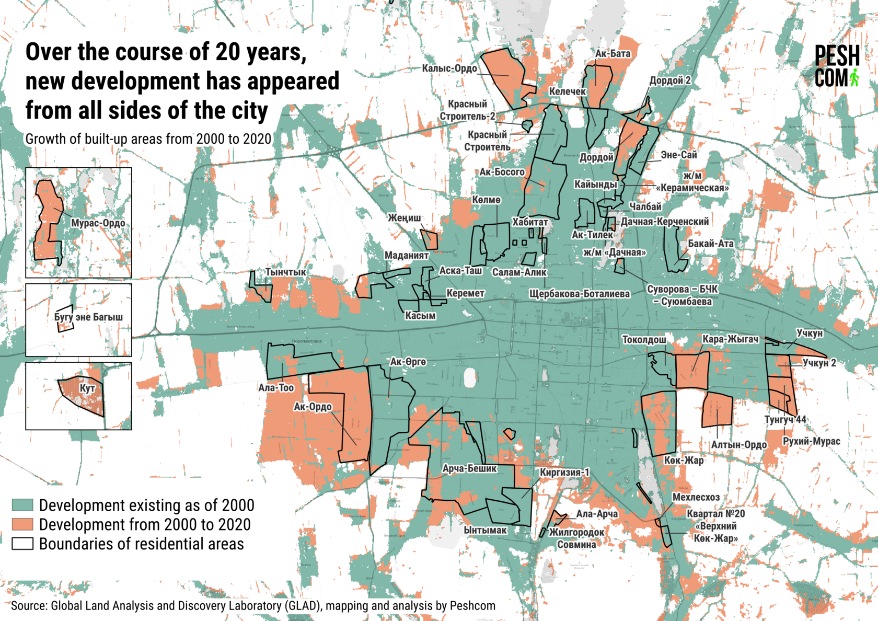 Due to limitations in time and financial resources, this study is confined to four janykonush neighbourhoods located on the periphery of Bishkek, the capital of Kyrgyzstan. These neighbourhoods were selected because they represent areas where the problem of urban non-integration can be observed most intensively.
Findings
Reasons for Migration to The City
It is observed that most individuals residing in the janykonushes surrounding Bishkek consist of rural-origin migrants. Of the participants, 51.4% migrated from villages, 33.9% from district centres, 8.4% from city centres, and 6.2% from small towns.
When the primary reasons for migration are examined, 63.9% of participants reported moving to Bishkek to find employment, 21.4% for their children to receive better education, 5.8% to join relatives or fellow townspeople already residing in the city, and 5% to access healthcare services. Additionally, cases of migration due to intra-family conflicts, such as inheritance disputes (3.4%) and natural disasters (0.5%), were also identified.
Economic Situation
The findings indicate that in 47.1% of households, only one individual is employed, in 36.5%, two individuals are employed, and in 9.9%, three individuals contribute to household income. Another significant finding is that 72.6% of participants do not have regular and stable employment. When assessed by neighbourhood, 61.8% of residents in Ak Ordo, 88.3% in Kut, 75.7% in Ak Zhar, and 72.6% in Altyn Kazyk lack regular employment. These figures demonstrate a very low level of job security and highlight the uncertainty surrounding livelihoods.
Table 2
Distribution of Monthly Household Income by Janykonush
| Monthly Household Income (KGS) | Below 10,000 | 11.000 –20.000 | 21.000 –35.000 | 36.000 –50.000 | 51.000 –100.000 | 100.000 –200.000 | Total | |
|---|---|---|---|---|---|---|---|---|
| Ak Ordo | Number | 32 | 44 | 49 | 12 | 5 | 2 | 144 |
| (%) | 7,7 | 10,6 | 11,8 | 2,9 | 1,2 | 0,5 | 34,6 | |
| Kut | Number | 19 | 34 | 7 | 0 | 0 | 0 | 60 |
| (%) | 4,6 | 8,2 | 1,7 | 0,0 | 0,0 | 0,0 | 14,4 | |
| Ak Zhar | Number | 62 | 63 | 23 | 2 | 1 | 1 | 152 |
| (%) | 14,9 | 15,1 | 5,5 | 0,5 | 0,2 | 0,2 | 36,5 | |
| Altyn Kazyk | Number | 18 | 34 | 7 | 1 | 0 | 0 | 60 |
| (%) | 4,3 | 8,2 | 1,7 | 0,2 | 0,0 | 0,0 | 14,4 | |
| Total | Number | 131 | 175 | 86 | 15 | 6 | 3 | 416 |
| (%) | 31,5 | 42,1 | 20,7 | 3,6 | 1,4 | 0,7 | 100 | |
Monthly income levels further reveal clear economic vulnerability. In Ak Ordo, 11.8% of households reported incomes between 21,000 and 35,000 KGS, representing the highest income bracket observed in that neighbourhood. In the 11,000–20,000 KGS range, the highest proportions were reported in Kut (8.2%), Ak Zhar (15.1%), and Altyn Kazyk (8.2%). At the end of April 2022, the period in which the survey was conducted, 1 US dollar was approximately 80.87 Kyrgyz som (National Bank of the Kyrgyz Republic). The remaining participants reported monthly incomes below 10,000 KGS. These findings indicate serious obstacles to economic integration into the city (see Table 2).
As shown in the table, 73.6% of participants have a monthly income below approximately 250 USD, and 31.5% earn less than approximately 123 USD per month. This level of poverty indicates the presence of a janykonush population that corresponds to David Harvey’s description of the “precariat”—those who live without security, without certainty about their future, and without stable employment (Harvey, Asi Şehirler 34).
Legal Status
The Janykonush areas that emerged around Bishkek because of uncontrolled and irregular urbanisation draw attention due to deficiencies in legal status and infrastructure. One of the most fundamental problems in these unplanned and unsupervised settlements is the absence of official documents for the dwellings—specifically the so-called red book (кызыл китеп) and, consequently, the lack of legal residence registration in the city. This situation directly affects the right to housing and access to healthcare, education, voting rights, and other basic social services.
Within the scope of the research, the data regarding residence permits are striking. In Ak Ordo, 43.8% of households lack the red book; in Kut, 47.5%; Ak Zhar, 80.3%; and in Altyn Kazyk, 73.3%. Overall, 61.9% have no registration at all, whereas 7.2% have incomplete registration (Table 3). These findings indicate that residents face serious obstacles to legal integration into the city.
Table 3
Residence Permit Status of Family Members in the City (%)
| Do family members have a residence permit in the city? | All have | Not complete | None | Total | |
|---|---|---|---|---|---|
| Ak Ordo | Within the neighbourhood | 50,0 | 6,2 | 43,8 | 100 |
| Between neighborhoods | 17,3 | 2,2 | 15,2 | 34,7 | |
| Kut | Within the neighbourhood | 42,4 | 10,2 | 47,5 | 100 |
| between neighborhoods | 6,0 | 1,4 | 6,7 | 14,2 | |
| Ak Zhar | Within the neighbourhood | 11,2 | 8,6 | 80,3 | 100 |
| Between neighborhoods | 4,1 | 3,1 | 29,4 | 36,6 | |
| Altyn Kazyk | Within the neighbourhood | 23,3 | 3,3 | 73,3 | 100 |
| Between neighborhoods | 3,4 | 0,5 | 10,6 | 14,5 | |
| Total | 30,8 | 7,2 | 61,9 | 100 | |
Among those whose registration status is “incomplete,” 60% stated that the reason was the absence of an official housing document; 20% indicated the possibility of moving elsewhere; and 20% cited missing identification or passport documents. Among those with “no registration,” an overwhelming 96.4% identified the lack of a legal housing document as the primary reason (Table 4). This makes it practically impossible to obtain residence registration and severely restricts access to citizenship rights.
Table 4
Reasons for the Absence of Official Registration (%)
| Registration Status Registration Status | If you don't have an official registration, what is the reason? |
|---|
| No official housing document. | May move from here | No ID6 document | Total | |
|---|---|---|---|---|
| Not complete | 60.0 | 20.0 | 20.0 | 100 |
| None | 96.4 | 3.2 | 0.4 | 100 |
Given that residence registration is mandatory in Kyrgyzstan in order to access education, healthcare, and social services, this lack of legal status directly prevents the residents of janykonush from accessing their fundamental citizenship rights. In order for individuals to access health centers, schools, or other public services, not only individual documents but also the legal recognition of their place of residence is required (Bazarova et al. 58).
In summary, the legal problems in the janykonushes extend far beyond mere registration gaps, leading to rights deprivation in areas ranging from housing ownership to voting rights. Sociologically, this corresponds to social exclusion and, as conceptualised in this study, to public exclusion. De Haan (10–19) defines social exclusion not only in economic, social, and cultural terms but also in relation to political power structures, identity, and labour markets. The deprivation of essential public services in these settlements reinforces class-based divisions and exclusion within society. This constitutes one of the primary structural barriers to urban integration. The absence of property title documents—and consequently even voting rights—represents one of the most significant obstacles to political integration, as emphasised by Manuel Castells.
The ways in which houses were acquired in the janykonush neighbourhoods vary. Since these settlements were established through informal and often illegal processes, property ownership is highly complex. According to the research findings, housing acquisition in the janykonushes occurred as follows:
- 88.0% purchased their homes.
- 6.4% inherited them.
- 4.0% seized them during or after the political revolutions of 2005 and 2010.
- 1.3% received them from the state.
- 0.3% received homes purchased for them by Arab charitable organisations (Table 5).
Table 5
Forms of Housing Acquisition by Neighbourhood (%)
| How did you acquire your home? | Purchased | Inherited | Seized during/after political revolutions | Given by the state. | Through Arab charity | Total |
|---|---|---|---|---|---|---|
| Ak Ordo | 88.1 | 7.1 | 1.6 | 3.2 | 0.0 | 100 |
| Kut | 92.7 | 5.5 | 0.0 | 0.0 | 1.8 | 100 |
| Ak Zhar | 86.5 | 6.0 | 7.5 | 0.0 | 0.0 | 100 |
| Altyn Kazyk | 86.7 | 6.7 | 5.0 | 1.7 | 0.0 | 100 |
| Total | 88.0 | 6.4 | 4.0 | 1.3 | 0.3 | 100 |
These data indicate that state-owned lands were appropriated through illegal means and later sold to others for housing.
The lack of red book ownership remains the most significant legal problem. By neighbourhood, 43.7% in Ak Ordo, 61% in Kut, and all residents in Ak Zhar and Altyn Kazyk lack property title documents; overall, 74.9% do not possess a legal title deed (Table 6).
Table 6
Red Book Ownership Status of Janykonush Residents
| Janykonush | Red Book Presents | No Red Book | Total |
|---|---|---|---|
| Ak Ordo | 56.3 | 43.7 | 100 |
| Kut | 39.0 | 61.0 | 100 |
| Ak Zhar | 0.0 | 100 | 100 |
| Altyn Kazyk | 0.0 | 100 | 100 |
| Total | 25.1 | 74.9 | 100 |
The interview findings also support the survey data:
- “Our house does not have a red book. Therefore, my residence registration remains in my hometown. Here in the konush7, we cannot benefit from healthcare, school, kindergarten, or voting rights” (P11, female, 49 years old).
- “No one in Altyn Kazyk has a red book. Therefore our neighbourhood does not even have official status” (P13, male, 44 years old).
- “We cannot obtain passports; we do not have residence registration. We are forced to go to private healthcare institutions. We do not even have the right to vote in elections. In short, we live as if we are ‘citizens considered non-existent’ in this country” (P16, female, 42 years old).
Residents of the janykonushes stated that due to the absence of official documents, they are deprived of fundamental rights such as healthcare, education, and social services. The lack of property documentation generates legal problems and delays residents’ adaptation and integration into the city. The data demonstrate that the red book is not merely a property document; it is also the key to accessing basic services and, in practice, functions almost as a document of exclusion.
Infrastructure Problems
According to Henri Lefebvre (67–71), space can be conceptualised in three forms: perceived (physical) space, conceived (mental) space, and lived (social) space. The infrastructure findings presented below indicate that janykonush residents experience serious problems in all three dimensions of space.
In the janykonushes, deficiencies are evident in infrastructure services such as electricity, water, heating, sewage, park areas, public transportation access, and fire safety. In squatter settlements, even basic services remain largely unmet (Table 7).
Table 7
Status of Urban Services Provided in the Janykonushes (%)
| Infrastructure and Spatial Services | Available | Not Available | Insufficient | Total | |
|---|---|---|---|---|---|
| Electricity | 75.0 | 10.6 | 14.4 | 100 | |
| Water | 69.0 | 9.4 | 21.6 | 100 | |
| Public transport (minibus, bus) | 53.6 | 28.6 | 17.8 | 100 | |
| Gas | 14.9 | 82.0 | 3.1 | 100 | |
| Central heating | 11.5 | 85.4 | 3.1 | 100 | |
| Stove/heating cooker | 73.8 | 21.6 | 4.6 | 100 | |
| Sewage system | 15.1 | 81.8 | 3.1 | 100 | |
| Children’s parks | 17.1 | 75.7 | 7.2 | 100 | |
| Public parks | 11.5 | 86.8 | 1.7 | 100 | |
| Cultural venues (sports, theatre, and cinema) | 10.6 | 87.5 | 1.9 | 100 | |
| Places of worship (e.g., mosque) | 88.0 | 8.6 | 3.4 | 100 | |
Overall, the total rate of service provision (including health, education, and similar services) stands at 37.8%, whereas the rate of non-provision is 51.99%, and insufficiency accounts for 10.19%.
The extent to which infrastructure problems hinder urban integration is vividly summarised in the following interview excerpt from a 44-year-old female participant:
“When I go to the city square with my children, I often feel like a stranger. My children are still young, so they do not understand. But next to city residents, I feel like a ‘second-class’ person or a foreigner. Compared to me, city residents seem to have better living conditions—clean and civilised. I look like someone who has come down from the mountains, covered in dust and mud from the janykonush. In that situation, I truly feel like a stranger compared to them. No matter how expensive or high-quality your clothes are, it does not matter. Because here it is dusty and muddy, you never look clean.” (P9, female, 44 years old)
Electricity and Water Problems
In some janykonush areas, problems in electricity services have been observed due to the lack of the red book. According to the research findings, 75% of households in the janykonush have access to electricity, 10.6% have limited access, and 14.4% consider the electricity service insufficient (Table 8). However, some participants stated that they provide electricity through private means and cannot use it efficiently.
“Electricity is insufficient; it is frequently cut off, and all of it belongs to the private sector. We installed all the electric poles ourselves” (P5, female, 34 years old).
Similarly, P6 (36 years old, male) emphasised that there is only one transformer and that it is insufficient. It was also noted that electricity service only meets basic lighting needs:
“Electricity is so inadequate that we cannot even bake bread in the oven” (P7, female, 46 years old). It is evident that the lack of adequate electricity infrastructure has a negative effect on the daily lives of the residents. The residents of janykonush, who live here, state that they have been able to connect electricity to their homes by erecting power poles on their own, and that this has caused them serious problems.
Table 8
Access to and Adequacy of Electricity by Janykonush (%)
| Janykonush | Available | Not Available | Insufficient | Total |
|---|---|---|---|---|
| Ak Ordo | 74.1 | 8.4 | 17.5 | 100 |
| Kut | 8.2 | 49.2 | 42.6 | 100 |
| Ak Zhar | 96.7 | 0.7 | 2.6 | 100 |
| Altyn Kazyk | 90.0 | 1.7 | 8.3 | 100 |
| Total | 75.0 | 10.6 | 14.4 | 100 |
Similar problems were experienced in the Altyn Kazyk Janykonush; however, it was stated that services were provided after residents blocked the roads and organised a protest.
“When I came home, there was no electricity at all… After we blocked the main road and held a protest, electricity came” (P10, male, 57 years old).
“When we first came here, there was no electricity in this janykonush. We protested by blocking roads and asked the state to at least solve our electricity and water problems. After that, our water and electricity problems were resolved” (P13, male, 44 years old).
Regarding the water problem, in Kut there was no water at all during the first years when migrants began to settle there. Later, with aid from Arab countries, water was extracted from underground sources. However, the quality of this water is extremely poor.
“When we first arrived, there was no water at all… Then Arabs helped” (P1, female, 36 years old).
P4 (36 years old, female) stated that the extracted water is salty and sandy, making it unsuitable for drinking.
P5 (female, 34 years old) added: “If you leave the water for two days, worms come out of it,” she said. Emphasising how far the existing water is from being hygienic.
In general, although 69% of the Janykonush consider water to be sufficient, 21.6% state that it is insufficient, and 9.4% report having no water at all. This indicates serious problems in meeting basic needs such as drinking and cleaning (Table 9).
Table 9
Access to and Adequacy of Water Services by Janykonush (%)
| Janykonush | Available | Not Available | Insufficient | Total |
|---|---|---|---|---|
| Ak Ordo | 79.0 | 4.9 | 16.1 | 100 |
| Kut | 11.5 | 36.1 | 52.5 | 100 |
| Ak Zhar | 94.1 | 0.7 | 5.3 | 100 |
| Altyn Kazyk | 40.0 | 15.0 | 45.0 | 100 |
| Total | 69.0 | 9.4 | 21.6 | 100 |
The inadequacy of basic infrastructure services, such as electricity and water, directly affects the integration of the janykonush into the city.
Road and Transportation Problems
The fact that the janykonush were established in an unplanned manner, and that they lack title deeds, has led to serious disruptions in the provision of infrastructure services. At the forefront of these infrastructure problems is the lack of roads and transportation. Since some streets are unpaved, transportation becomes almost impossible, especially during rainy weather.
Participants’ statements clearly reflect this situation.
“Drainage channels on the roads were not properly constructed, and during rainy weather, water enters our homes” (P20, 62 years old, male).
P1 (36 years old, female) expressed that the transportation problem has still not been resolved and that no buses or minibuses serve the area.
According to the survey results, transportation services are available at a rate of 77.6% in Ak Ordo and 73.7% in Ak Zhar. However, no public transportation operate in the Kut and Altyn Kazyk Janykonush. Residents can only access vehicles passing along the main roads outside the neighbourhood.
Table 10
Access to and Adequacy of Public Transportation (Minibus/Bus) Services by Janykonush (%)
| Janykonush | Available | Not Available | Insufficient | Total |
|---|---|---|---|---|
| Ak Ordo | 77.6 | 9.1 | 13.3 | 100 |
| Kut | 0.0 | 80.3 | 19.7 | 100 |
| Ak Zhar | 73.7 | 2.6 | 23.7 | 100 |
| Altyn Kazyk | 0.0 | 88.3 | 11.7 | 100 |
| Total | 53.6 | 28.6 | 17.8 | 100 |
“There was no road at all; we fixed it ourselves together with our neighbours. On rainy days, we are stuck to mud, and on sunny days, we are covered in dust. We solve all our problems through the private sector” (P12, female, 46 years old).
“The roads here are dusty and muddy. Even the quality of our clothes doesn't matter. When we go to the city center, it's immediately obvious that we're from janykonush” (P8, male, 37 years old).
This indicates that the deprivations cause feelings of embarrassment in front of other people in the city, making spatial and social integration difficult.
Insufficiency of Heating, Natural Gas, and Sewerage Services
Infrastructure services in the janykonush located around the city of Bishkek, are seriously inadequate. This situation is particularly evident in the context of deficiencies in heating, gas, and sewerage systems.
Regarding heating systems, since 56.3% of households in Ak Ordo possess the red property document, some infrastructure services are provided, albeit limited. Accordingly, in Ak Ordo, 33.8% of households have a heating (radiator) system, 57.0% do not, and 9.2% find it insufficient. In Kut, Ak Zhar, and Altyn Kazyk, there are no central heating systems at all. Overall, only 11.5% of participants reported having access to this service, 85.4% stated that it does not exist, and 3.1% considered it insufficient (Table 11). Due to the lack of this service, 73.8% of participants use stoves or traditional heating systems to warm their homes. It is observed that 21.6% have no heating system at all, and 4.6% resort to alternative methods such as electric devices. This situation causes severe air pollution in Bishkek during the winter months.
Table 11
Status of Heating/Radiator Services in the Janykonush (%)
| Janykonush | Available | Not Available | Insufficient | Total |
|---|---|---|---|---|
| Ak Ordo | 33.8 | 57.0 | 9.2 | 100 |
| Kut | 0.0 | 100 | 0.0 | 100 |
| Ak Zhar | 0.0 | 100 | 0.0 | 100 |
| Altyn Kazyk | 0.0 | 100 | 0.0 | 100 |
| Total | 11.5 | 85.4 | 3.1 | 100 |
There are also serious deficiencies in natural gas services. In the Ak Ordo janykonush, 43.7% of households reported receiving gas service, 47.2% stated that they do not have access, and 9.2% found it insufficient. In Kut, Ak Zhar, and Altyn Kazyk, there is no natural gas infrastructure at all. Overall, while only 14.9% benefit from natural gas, 82.0% are deprived of this service (Table 12).
Table 12
Status of Natural Gas Services in the Janykonush (%)
| Janykonush | Available | Not Available | Insufficient | Total |
|---|---|---|---|---|
| Ak Ordo | 43.7 | 47.2 | 9.2 | 100 |
| Kut | 0.0 | 100 | 0.0 | 100 |
| Ak Zhar | 0.0 | 100 | 0.0 | 100 |
| Altyn Kazyk | 0.0 | 100 | 0.0 | 100 |
| Total | 14.9 | 82.0 | 3.1 | 100 |
Sewerage infrastructure is partially available only in Ak Ordo. In this area, 44.4% of residents reported having access to a sewerage system, 46.5% stated that they do not have access, and 9.2% found it insufficient. In Kut, Ak Zhar, and Altyn Kazyk Janykonush, there is no sewerage service at all. Overall, 81.8% of residents lack access to sewerage services.
Table 13
Status of Sewerage Services in the Janykonush (%)
| Janykonush | Available | Not Available | Insufficient | Total |
|---|---|---|---|---|
| Ak Ordo | 44.4 | 46.5 | 9.2 | 100 |
| Kut | 0.0 | 100 | 0.0 | 100 |
| Ak Zhar | 0.0 | 100 | 0.0 | 100 |
| Altyn Kazyk | 0.0 | 100 | 0.0 | 100 |
| Total | 15.1 | 81.8 | 3.1 | 100 |
Parks as a Deficiency in Social Amenities
The lack of social amenities in janykonushes is one of the most visible characteristics of the failure to achieve spatial justice. The lack of children’s playgrounds and public recreational areas can be considered a negative factor for children’s physical and social development and for the healthy formation of community life.
According to the research findings, in Ak Ordo, 46.5% of participants stated that there is a children’s park, 38.7% said there is none, and 14.8% found existing parks insufficient. In contrast, there are no children’s parks in Kut and Ak Zhar Janykonush. In Altyn Kazyk, only 8.3% reported the presence of a children’s park, 76.7% stated that there is none, and 15% considered it insufficient. Overall, only 17.1% of the janykonush have a children’s park, whereas 75.7% lack one (Table 14).
Table 14
Availability of Children’s Parks in the Janykonush (%)
| Janykonush | Available | Not Available | Insufficient | Total |
|---|---|---|---|---|
| Ak Ordo | 46.5 | 38.7 | 14.8 | 100 |
| Kut | 0.0 | 100 | 0.0 | 100 |
| Ak Zhar | 0.0 | 100 | 0.0 | 100 |
| Altyn Kazyk | 8.3 | 76.7 | 15.0 | 100 |
| Total | 17.1 | 75.7 | 7.2 | 100 |
When examining data on public recreational parks, only in Ak Ordo did 33.8% of participants report the presence of regular parks, whereas 61.3% stated that there are none and 4.9% considered them insufficient. In the other three neighbourhoods (Kut, Ak Zhar, and Altyn Kazyk), there are no public recreational parks (Table 15).
Table 15
Availability of Public Recreational Parks in the Janykonush (%)
| Janykonush | Available | Not Available | Insufficient | Total |
|---|---|---|---|---|
| Ak Ordo | 33.8 | 61.3 | 4.9 | 100 |
| Kut | 0.0 | 100 | 0.0 | 100 |
| Ak Zhar | 0.0 | 100 | 0.0 | 100 |
| Altyn Kazyk | 0.0 | 100 | 0.0 | 100 |
| Total | 11.5 | 86.8 | 1.7 | 100 |
Participants are aware of the importance of children’s parks and social areas; however, they recognise that these remain “inaccessible unless other problems are resolved first.” Despite being conscious of the significance of parks, they evaluate their existence as a “luxury” or an “unattainable dream.”
Inadequacy of Health Services
Although more than 15 years have passed since the establishment of the squatter neighbourhoods, health services in these areas either do not exist at all or remain insufficient. Among the janykonush included in the research sample, only in Ak Ordo is partial access to health services possible (63.6%).
In contrast, 95.0% of participants in Kut stated that there are no health services at all and 5.0% said they are insufficient; in Ak Zhar, 90.1% reported that there are none and 9.9% said they are insufficient; and in Altyn Kazyk, 98.3% stated that there are no services at all, while only 1.7% found them insufficient.
Outside Ak Ordo, health services in Kut, Ak Zhar, and Altyn Kazyk Janykonush are almost negligible. Overall, it is understood that in 65.1% of the janykonush there are no health services, 21.9% services are available, and 13.0% are considered insufficient (Table 16).
Table 16
Access to Health Services by Janykonush (%)
| Janykonush | Available | Not Available | Insufficient | Total |
|---|---|---|---|---|
| Ak Ordo | 63.6 | 11.9 | 24.5 | 100 |
| Kut | 0.0 | 95.0 | 5.0 | 100 |
| Ak Zhar | 0.0 | 90.1 | 9.9 | 100 |
| Altyn Kazyk | 0.0 | 98.3 | 1.7 | 100 |
| Total | 21.9 | 65.1 | 13.0 | 100 |
Participants’ statements confirm this result:
“There are no health services at all. If our children get sick, no ambulance comes. We pray ‘God forbid’ and act as our own doctors” (P2, female, 40 years old).
“When my children get sick, we take them to the clinic in the neighbouring area. But sometimes they do not pay attention at all” (P4, female, 36 years old).
“The ambulance cannot enter the neighbourhood. It comes to the main road, and we have to carry the patient ourselves” (P12, female, 46 years old).
These statements show not only the physical lack of health services but also the sense of helplessness experienced by some janykonush residents and the problems in accessing certain rights. This situation does not facilitate their integration into the city.
Problems in Educational Services
Serious deficiencies are observed in preschool and daycare services in the janykonush included in the research sample. In the Ak Ordo Janykonush, 40.3% of participants stated that these services do not exist at all, 36.8% said they are available, and 22.9% found them insufficient.
“There is no daycare here. There are private daycare centers, but they are very expensive. There is no state-run daycare at all. Unfortunately, it is insufficient for children” (P21, female, 56 years old).
There are no kindergarten or daycare services in Kut and Altyn Kazyk. In Ak Zhar, 64.5% of participants stated that these services do not exist, 17.8% said there are private kindergartens, and 17.8% found them insufficient. Overall, kindergarten and daycare services do not exist in 66.4% of the janykonush; 19.2% have them as private-sector services, whereas 14.4% consider them insufficient (Table 17).
Table 17
Access to Kindergarten and Daycare Services by Janykonush (%)
| Kindergarten and Daycare Service | Available | Not Available | Insufficient | Total |
|---|---|---|---|---|
| Ak Ordo | 36.8 | 40.3 | 22.9 | 100 |
| Kut | 0.0 | 100 | 0.0 | 100 |
| Ak Zhar | 17.8 | 64.5 | 17.8 | 100 |
| Altyn Kazyk | 0.0 | 100 | 0.0 | 100 |
| Total | 19.2 | 66.4 | 14.4 | 100 |
In terms of general education schools, there are schools in Ak Ordo at a rate of 56.2%; however, 43.8% of participants find them insufficient. There are no such schools in Kut, Ak Zhar, and Altyn Kazyk Janykonush. Across all janykonush, 65.4% have no schools at all; 19.5% have schools, but 15.1% consider them insufficient (Table 18).
Table 18
Access to General Education Schools (%)
| Janykonush | Available | Not Available | Insufficient | Total |
|---|---|---|---|---|
| Ak Ordo | 56.2 | 43.8 | 22.9 | 100 |
| Kut | 0.0 | 100 | 0.0 | 100 |
| Ak Zhar | 0.0 | 100 | 0.0 | 100 |
| Altyn Kazyk | 0.0 | 100 | 0.0 | 100 |
| Total | 19.5 | 65.4 | 15.1 | 100 |
Interviews reveal that participants interpret these deficiencies as factors directly affecting their lives:
“Since there is no school in the janykonush where I live, my children go to a school in another neighbourhood. Classes are very crowded; there are 50 children in one classroom, and 4–5 children try to fit into one desk. This lowers the quality of education” (P2, female, 40 years old).
“There is no school. We forcibly enrol our children in schools in other neighbourhoods. Some schools refuse because they are overcrowded. Transportation is also a big problem. There is no municipal bus, and no minibus comes. The daily transportation cost for four children is 120 som. This is very difficult for us” (P10, male, 57 years old).
“The children get on a minibus at 6:30 in the morning to go to schools in different parts of the city. In the evenings, since the minibuses are full, we sometimes have to bring them back by taxi” (P17, male, 63 years old).
The proportion of families with children in the janykonush is quite high. Therefore, the adequacy of educational services is of great importance. The availability of courses and tutoring centres for education, culture, and arts is also low. 73.8% of participants stated that such courses do not exist at all, 12.5% said there are private courses, and 13.7% found them insufficient (Table 19).
Table 19
Access to Courses and Tutoring Centres for Education, Culture, and Arts by Janykonush (%)
| Janykonush | Available | Not Available | Insufficient | Total |
|---|---|---|---|---|
| Ak Ordo | 29.4 | 39.9 | 43.8 | 100 |
| Kut | 0.0 | 100 | 0.0 | 100 |
| Ak Zhar | 6.6 | 84.9 | 8.6 | 100 |
| Altyn Kazyk | 0.0 | 100 | 0.0 | 100 |
| Total | 12.5 | 73.8 | 13.7 | 100 |
Participants stated that due to the absence of the red book, they cannot benefit from schools and are deprived of their right to education. In neighbourhoods where schools exist, overcrowded classrooms constitute a serious problem. Transportation costs and the lack of public transport make access to school difficult for children and create a significant financial burden, especially for large families. These ongoing problems delay the integration of the neighbourhoods into the city.
Security Problems
The research findings indicate that security services in the janykonush areas located on the outskirts of Bishkek are seriously inadequate and that this situation is a significant risk factor for local residents.
Statements obtained through qualitative interviews reveal that citizens highlight security risks as one of the reasons for their lack of integration into the city.
“There are security problems here as well. Thieves stole parts from our car. There are people who break into our neighbours’ houses and commit theft” (P23, male, 38 years old).
“There is a security problem in this janykonush. Thieves stole about 10,000 som from our house and then about 26,000 som from our neighbours’ house” (P1, female, 36 years old).
Table 20
Status of Security Services in the Janykonush (%)
| Janykonush | Available | Not Available | Insufficient | Total |
|---|---|---|---|---|
| Ak Ordo | 49.6 | 34.8 | 15.6 | 100 |
| Kut | 0.0 | 87.1 | 12.9 | 100 |
| Ak Zhar | 41.4 | 40.1 | 18.4 | 100 |
| Altyn Kazyk | 0.0 | 98.3 | 1.7 | 100 |
According to the quantitative data, in Ak Ordo, security services are available at a rate of 49.6%; however, 34.8% reported that there is no such service at all, and 15.6% stated that it is insufficient. In Ak Zhar, 41.4% of households reported having security services, while 40.1% stated that there are none. In Kut, the proportion of those indicating the absence of security services reaches 87.1%, while in Altyn Kazyk this rate rises to a very high level of 98.3%. Overall, 53.8% of participants stated that there are no security services, 32.0% said they are available, and 14.2% considered them insufficient (Table 21).
Table 21
Status of Security Services in the Janykonush (%)
| Janykonush | Available | Not Available | Insufficient | Total |
|---|---|---|---|---|
| Ak Ordo | 49.6 | 34.8 | 15.6 | 100 |
| Kut | 0.0 | 87.1 | 12.9 | 100 |
| Ak Zhar | 41.4 | 40.1 | 18.4 | 100 |
| Altyn Kazyk | 0.0 | 98.3 | 1.7 | 100 |
Inadequacy of Environmental and Sanitary Safety Services
In the janykonush areas located on the urban periphery, the inadequacy of environmental and sanitary safety services is considered a structural problem that directly threatens public health, going beyond mere infrastructure deficiencies. Research findings show that environmental risks intensify seasonally and that local residents strongly perceive this situation as seriously lowering their quality of life.
According to quantitative data, 66.1% of respondents in Kut stated that these services are not available, while in Altyn Kazyk, with a rate of 93.3%, it stands out as the area with the least environmental and sanitary safety services. The two relatively safest neighbourhoods are Ak Ordo (67.6%) and Ak Zhar (52%).
Table 22
Status of Environmental and Sanitary Safety Services in the Janykonush (%)
| Janykonush | Available | Not Available | Insufficient | Total |
|---|---|---|---|---|
| Ak Ordo | 67.6 | 13.4 | 19.0 | 100 |
| Kut | 24.2 | 66.1 | 9.7 | 100 |
| Ak Zhar | 52.0 | 26.3 | 21.7 | 100 |
| Altyn Kazyk | 3.3 | 93.3 | 3.3 | 100 |
Participants’ statements reveal their concerns regarding air pollution and environmental problems.
“In winter, our ecological problems increase. The coal burned in houses covers the entire janykonush. It is very harmful. There is no clean air” (P23, male, 38 years old).
“In winter, everyone uses stoves. The smoke from the stoves covers the whole neighbourhood and the city. The sky fills with coal smoke. We cannot even open the windows of our houses...” (P22, female, 35 years old).
Altyn Kazyk Janykonush is one of the most ecologically risky areas, as it is directly used as a dumping site for urban waste. Participants expressed their ecological concerns as follows:
“Since the city’s waste is dumped here, when the weather changes, bad smells spread everywhere. It is obvious how harmful this is ecologically” (P11, female, 49 years old).
There are serious environmental and sanitary safety problems in these areas. If the relevant institutions address these issues, the quality of life of residents will improve and significant contributions will be made to their integration into the city.
Conclusion
The socioeconomic challenges, political instability, and uneven development processes that Kyrgyzstan faced in the post-independence (1991) period have been decisive in the emergence of unplanned settlements janykonush around Bishkek. Today, the capital city of Bishkek is surrounded by 47 janykonush that lack official planning and have uncertain legal status.
The research findings show that internal migration, unemployment, and poverty play a dominant role in the emergence of the janykonush. In these economically fragile communities, most households live on low incomes, so 72.6% of participants do not have regular and stable employment. It would be claimed that this situation is one of the significant factors negatively affecting the quality of life of families residing in these neighbourhoods. While 63.9% of janykonush residents migrated in search of employment, 61.9% do not have residence permits or official registration in the city. At the core of this structural exclusion lies the lack of the red book (official property ownership document), perceived at a rate of 96.4%.
The comparative analysis between Ak Ordo and the other janykonush reveals striking differences in terms of red book ownership. The existence of the red book is an effective factor not only for individual rights but also for access to public services, urban integration, and social acceptance. Ak Ordo’s transition from janykonush status to official neighbourhood status paved the way for the gradual provision of municipal services. In contrast, in other areas where the red book is absent, infrastructure services have been highly inadequate.
The absence of the red book prevents access to physical services and the exercise of political and social citizenship rights. Education, health, transportation, security, environmental and sanitary services, as well as social amenities such as children’s parks, are provided only partially in documented areas; in other regions, they are largely unavailable. This situation leads janykonush residents to describe themselves as “citizens considered non-existent,” “second-class people,” or feeling “like strangers.” It has been demonstrated that the perception of exclusion from services differs at a statistically significant level depending on whether residents possess the red book.
Beyond the poverty experienced in the Bishkek Janykonush, the deprivation of even basic services due to living in peripheral neighbourhoods with problematic official status emerges as a dual factor that hinders urban integration and reinforces social exclusion. In the settlements examined in this study, the foundation of urban segregation and social exclusion stems from poverty and deprivation of public rights and services.
In summary, the inadequate provision of education and health services in the neighbourhoods examined also constitutes a significant cause. Evidently achieving comprehensive urbanisation of the city as a whole is a difficult process, however, at the very least, the will to resolve these problems would make the urbanisation process more sustainable and orderly.
Ultimately, there is a strong consensus that unless the red book issue is resolved, other service deficiencies will remain structurally unresolved. It is considered a necessity for the state to provide legal property documents to janykonush residents and to include these areas in urban integration processes, both in terms of legal and social equality. In this context, legal recognition is not merely a technical procedure but is also regarded as the foundation of social justice, the right to the city, and equal citizenship.
Author Contributions
Sagınay Karaeva (50%): Literature Review, Data Collection, Writing – Original Draft.
Prof. Dr. Mustafa Orçan (50%): Conceptualization, Methodology, Data Analysis, Interpretation of Results, Writing – Review & Editing.
Conflict of Interest Statement
There is no conflict of interest with any institution or person within the scope of this study. There is no conflict of interest between the authors.
Ethics Statement
Ethics committee approval for this study was obtained from the Scientific Research and Publication Ethics Committee (BAYEK) of Kyrgyz-Turkish Manas University, pursuant to Decision No. 4 dated April 25, 2022.
- In its original Cyrillic usage, it is Кыргыз ССР (Кыргыз Советтик Социалисттик Республикасы).
- Information obtained from the meeting held at the Bishkek Municipality, the Lenin District Administrative by the author, Karaeva (Interview date: 09.03.2022).
- After the Bolshevik Revolution in Russia in 1917, which ended the Empire, the city's name was changed from Pishpek to Frunze in 1926, in honor of Mikhail Vasilevich Frunze (1885–1925), a native of Bishkek and one of the leading commanders of the Revolution.
- It will be referred to by its local name from this point onward. Although the term janykonush bears similarities to the English term slum and the Turkish term gecekondu, in Kyrgyzstan it differs from both in terms of its legal status and implications, emerging as a distinct and context-specific concept.
- The number of jany konushes (informal settlements) have remained unchanged compared to 2025. Although these "new settlements" (jhanykonushes) have been incorporated into Bishkek, issues regarding water, gas, and transportation persist (Zhuravlev et al.).
- In Kyrgyzstan, the official identity card is called a passport.
- Konush refers to the informal squatter settlements on the fringes of Bishkek.
Images, Figures and Tables
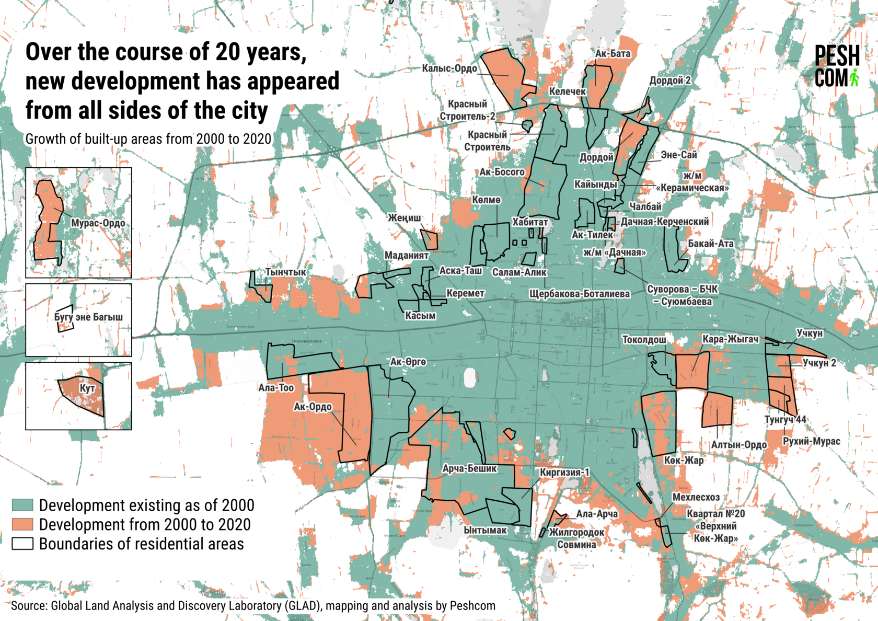
Table 1. Number of Participants by Neighbourhood Population and Neighbourhood Status Show tableHide table
| Janykonush | Official Neighbourhood Status | Population | Number of Participants | Percentage (%) |
|---|---|---|---|---|
| Ak Ordo | Yes | 14,450 | 144 | 34.6 |
| Kut | Yes | 1,200 | 60 | 14.4 |
| Ak Zhar | No | 15,000 | 152 | 36.5 |
| Altyn Kazyk | No | 3,000 | 60 | 14.4 |
| Total | – | 33,650 | 416 | 100 |
| Map 1. Bishkek (Zhuravlev et al.) | ||||
Table 2. Distribution of Monthly Household Income by Janykonush Show tableHide table
| Monthly Household Income (KGS) | Below 10,000 | 11.000 –20.000 | 21.000 –35.000 | 36.000 –50.000 | 51.000 –100.000 | 100.000 –200.000 | Total | |
|---|---|---|---|---|---|---|---|---|
| Ak Ordo | Number | 32 | 44 | 49 | 12 | 5 | 2 | 144 |
| (%) | 7,7 | 10,6 | 11,8 | 2,9 | 1,2 | 0,5 | 34,6 | |
| Kut | Number | 19 | 34 | 7 | 0 | 0 | 0 | 60 |
| (%) | 4,6 | 8,2 | 1,7 | 0,0 | 0,0 | 0,0 | 14,4 | |
| Ak Zhar | Number | 62 | 63 | 23 | 2 | 1 | 1 | 152 |
| (%) | 14,9 | 15,1 | 5,5 | 0,5 | 0,2 | 0,2 | 36,5 | |
| Altyn Kazyk | Number | 18 | 34 | 7 | 1 | 0 | 0 | 60 |
| (%) | 4,3 | 8,2 | 1,7 | 0,2 | 0,0 | 0,0 | 14,4 | |
| Total | Number | 131 | 175 | 86 | 15 | 6 | 3 | 416 |
| (%) | 31,5 | 42,1 | 20,7 | 3,6 | 1,4 | 0,7 | 100 | |
Table 3. Residence Permit Status of Family Members in the City (%) Show tableHide table
| Do family members have a residence permit in the city? | All have | Not complete | None | Total | |
|---|---|---|---|---|---|
| Ak Ordo | Within the neighbourhood | 50,0 | 6,2 | 43,8 | 100 |
| Between neighborhoods | 17,3 | 2,2 | 15,2 | 34,7 | |
| Kut | Within the neighbourhood | 42,4 | 10,2 | 47,5 | 100 |
| between neighborhoods | 6,0 | 1,4 | 6,7 | 14,2 | |
| Ak Zhar | Within the neighbourhood | 11,2 | 8,6 | 80,3 | 100 |
| Between neighborhoods | 4,1 | 3,1 | 29,4 | 36,6 | |
| Altyn Kazyk | Within the neighbourhood | 23,3 | 3,3 | 73,3 | 100 |
| Between neighborhoods | 3,4 | 0,5 | 10,6 | 14,5 | |
| Total | 30,8 | 7,2 | 61,9 | 100 | |
Table 4. Reasons for the Absence of Official Registration (%) Show tableHide table
| Registration Status Registration Status | If you don't have an official registration, what is the reason? |
|---|
Table 5. Forms of Housing Acquisition by Neighbourhood (%) Show tableHide table
| How did you acquire your home? | Purchased | Inherited | Seized during/after political revolutions | Given by the state. | Through Arab charity | Total |
|---|---|---|---|---|---|---|
| Ak Ordo | 88.1 | 7.1 | 1.6 | 3.2 | 0.0 | 100 |
| Kut | 92.7 | 5.5 | 0.0 | 0.0 | 1.8 | 100 |
| Ak Zhar | 86.5 | 6.0 | 7.5 | 0.0 | 0.0 | 100 |
| Altyn Kazyk | 86.7 | 6.7 | 5.0 | 1.7 | 0.0 | 100 |
| Total | 88.0 | 6.4 | 4.0 | 1.3 | 0.3 | 100 |
Table 6. Red Book Ownership Status of Janykonush Residents Show tableHide table
| Janykonush | Red Book Presents | No Red Book | Total |
|---|---|---|---|
| Ak Ordo | 56.3 | 43.7 | 100 |
| Kut | 39.0 | 61.0 | 100 |
| Ak Zhar | 0.0 | 100 | 100 |
| Altyn Kazyk | 0.0 | 100 | 100 |
| Total | 25.1 | 74.9 | 100 |
Table 7. Status of Urban Services Provided in the Janykonushes (%) Show tableHide table
| Infrastructure and Spatial Services | Available | Not Available | Insufficient | Total | |
|---|---|---|---|---|---|
| Electricity | 75.0 | 10.6 | 14.4 | 100 | |
| Water | 69.0 | 9.4 | 21.6 | 100 | |
| Public transport (minibus, bus) | 53.6 | 28.6 | 17.8 | 100 | |
| Gas | 14.9 | 82.0 | 3.1 | 100 | |
| Central heating | 11.5 | 85.4 | 3.1 | 100 | |
| Stove/heating cooker | 73.8 | 21.6 | 4.6 | 100 | |
| Sewage system | 15.1 | 81.8 | 3.1 | 100 | |
| Children’s parks | 17.1 | 75.7 | 7.2 | 100 | |
| Public parks | 11.5 | 86.8 | 1.7 | 100 | |
| Cultural venues (sports, theatre, and cinema) | 10.6 | 87.5 | 1.9 | 100 | |
| Places of worship (e.g., mosque) | 88.0 | 8.6 | 3.4 | 100 | |
Table 8. Access to and Adequacy of Electricity by Janykonush (%) Show tableHide table
| Janykonush | Available | Not Available | Insufficient | Total |
|---|---|---|---|---|
| Ak Ordo | 74.1 | 8.4 | 17.5 | 100 |
| Kut | 8.2 | 49.2 | 42.6 | 100 |
| Ak Zhar | 96.7 | 0.7 | 2.6 | 100 |
| Altyn Kazyk | 90.0 | 1.7 | 8.3 | 100 |
| Total | 75.0 | 10.6 | 14.4 | 100 |
Table 9. Access to and Adequacy of Water Services by Janykonush (%) Show tableHide table
| Janykonush | Available | Not Available | Insufficient | Total |
|---|---|---|---|---|
| Ak Ordo | 79.0 | 4.9 | 16.1 | 100 |
| Kut | 11.5 | 36.1 | 52.5 | 100 |
| Ak Zhar | 94.1 | 0.7 | 5.3 | 100 |
| Altyn Kazyk | 40.0 | 15.0 | 45.0 | 100 |
| Total | 69.0 | 9.4 | 21.6 | 100 |
Table 10. Access to and Adequacy of Public Transportation (Minibus/Bus) Services by Janykonush (%) Show tableHide table
| Janykonush | Available | Not Available | Insufficient | Total |
|---|---|---|---|---|
| Ak Ordo | 77.6 | 9.1 | 13.3 | 100 |
| Kut | 0.0 | 80.3 | 19.7 | 100 |
| Ak Zhar | 73.7 | 2.6 | 23.7 | 100 |
| Altyn Kazyk | 0.0 | 88.3 | 11.7 | 100 |
| Total | 53.6 | 28.6 | 17.8 | 100 |
Table 11. Status of Heating/Radiator Services in the Janykonush (%) Show tableHide table
| Janykonush | Available | Not Available | Insufficient | Total |
|---|---|---|---|---|
| Ak Ordo | 33.8 | 57.0 | 9.2 | 100 |
| Kut | 0.0 | 100 | 0.0 | 100 |
| Ak Zhar | 0.0 | 100 | 0.0 | 100 |
| Altyn Kazyk | 0.0 | 100 | 0.0 | 100 |
| Total | 11.5 | 85.4 | 3.1 | 100 |
Table 12. Status of Natural Gas Services in the Janykonush (%) Show tableHide table
| Janykonush | Available | Not Available | Insufficient | Total |
|---|---|---|---|---|
| Ak Ordo | 43.7 | 47.2 | 9.2 | 100 |
| Kut | 0.0 | 100 | 0.0 | 100 |
| Ak Zhar | 0.0 | 100 | 0.0 | 100 |
| Altyn Kazyk | 0.0 | 100 | 0.0 | 100 |
| Total | 14.9 | 82.0 | 3.1 | 100 |
Table 13. Status of Sewerage Services in the Janykonush (%) Show tableHide table
| Janykonush | Available | Not Available | Insufficient | Total |
|---|---|---|---|---|
| Ak Ordo | 44.4 | 46.5 | 9.2 | 100 |
| Kut | 0.0 | 100 | 0.0 | 100 |
| Ak Zhar | 0.0 | 100 | 0.0 | 100 |
| Altyn Kazyk | 0.0 | 100 | 0.0 | 100 |
| Total | 15.1 | 81.8 | 3.1 | 100 |
Table 14. Availability of Children’s Parks in the Janykonush (%) Show tableHide table
| Janykonush | Available | Not Available | Insufficient | Total |
|---|---|---|---|---|
| Ak Ordo | 46.5 | 38.7 | 14.8 | 100 |
| Kut | 0.0 | 100 | 0.0 | 100 |
| Ak Zhar | 0.0 | 100 | 0.0 | 100 |
| Altyn Kazyk | 8.3 | 76.7 | 15.0 | 100 |
| Total | 17.1 | 75.7 | 7.2 | 100 |
Table 15. Availability of Public Recreational Parks in the Janykonush (%) Show tableHide table
| Janykonush | Available | Not Available | Insufficient | Total |
|---|---|---|---|---|
| Ak Ordo | 33.8 | 61.3 | 4.9 | 100 |
| Kut | 0.0 | 100 | 0.0 | 100 |
| Ak Zhar | 0.0 | 100 | 0.0 | 100 |
| Altyn Kazyk | 0.0 | 100 | 0.0 | 100 |
| Total | 11.5 | 86.8 | 1.7 | 100 |
Table 16. Access to Health Services by Janykonush (%) Show tableHide table
| Janykonush | Available | Not Available | Insufficient | Total |
|---|---|---|---|---|
| Ak Ordo | 63.6 | 11.9 | 24.5 | 100 |
| Kut | 0.0 | 95.0 | 5.0 | 100 |
| Ak Zhar | 0.0 | 90.1 | 9.9 | 100 |
| Altyn Kazyk | 0.0 | 98.3 | 1.7 | 100 |
| Total | 21.9 | 65.1 | 13.0 | 100 |
Table 17. Access to Kindergarten and Daycare Services by Janykonush (%) Show tableHide table
| Kindergarten and Daycare Service | Available | Not Available | Insufficient | Total |
|---|---|---|---|---|
| Ak Ordo | 36.8 | 40.3 | 22.9 | 100 |
| Kut | 0.0 | 100 | 0.0 | 100 |
| Ak Zhar | 17.8 | 64.5 | 17.8 | 100 |
| Altyn Kazyk | 0.0 | 100 | 0.0 | 100 |
| Total | 19.2 | 66.4 | 14.4 | 100 |
Table 18. Access to General Education Schools (%) Show tableHide table
| Janykonush | Available | Not Available | Insufficient | Total |
|---|---|---|---|---|
| Ak Ordo | 56.2 | 43.8 | 22.9 | 100 |
| Kut | 0.0 | 100 | 0.0 | 100 |
| Ak Zhar | 0.0 | 100 | 0.0 | 100 |
| Altyn Kazyk | 0.0 | 100 | 0.0 | 100 |
| Total | 19.5 | 65.4 | 15.1 | 100 |
Table 19. Access to Courses and Tutoring Centres for Education, Culture, and Arts by Janykonush (%) Show tableHide table
| Janykonush | Available | Not Available | Insufficient | Total |
|---|---|---|---|---|
| Ak Ordo | 29.4 | 39.9 | 43.8 | 100 |
| Kut | 0.0 | 100 | 0.0 | 100 |
| Ak Zhar | 6.6 | 84.9 | 8.6 | 100 |
| Altyn Kazyk | 0.0 | 100 | 0.0 | 100 |
| Total | 12.5 | 73.8 | 13.7 | 100 |
Table 20. Status of Security Services in the Janykonush (%) Show tableHide table
| Janykonush | Available | Not Available | Insufficient | Total |
|---|---|---|---|---|
| Ak Ordo | 49.6 | 34.8 | 15.6 | 100 |
| Kut | 0.0 | 87.1 | 12.9 | 100 |
| Ak Zhar | 41.4 | 40.1 | 18.4 | 100 |
| Altyn Kazyk | 0.0 | 98.3 | 1.7 | 100 |
Table 21. Status of Security Services in the Janykonush (%) Show tableHide table
| Janykonush | Available | Not Available | Insufficient | Total |
|---|---|---|---|---|
| Ak Ordo | 49.6 | 34.8 | 15.6 | 100 |
| Kut | 0.0 | 87.1 | 12.9 | 100 |
| Ak Zhar | 41.4 | 40.1 | 18.4 | 100 |
| Altyn Kazyk | 0.0 | 98.3 | 1.7 | 100 |
Table 22. Status of Environmental and Sanitary Safety Services in the Janykonush (%) Show tableHide table
| Janykonush | Available | Not Available | Insufficient | Total |
|---|---|---|---|---|
| Ak Ordo | 67.6 | 13.4 | 19.0 | 100 |
| Kut | 24.2 | 66.1 | 9.7 | 100 |
| Ak Zhar | 52.0 | 26.3 | 21.7 | 100 |
| Altyn Kazyk | 3.3 | 93.3 | 3.3 | 100 |
References
- Bazarova, G. Y., et al. “Vnutrennyaya migratsiya naseleniya Kyrgyzstana.” Izvestiya vuzov Kyrgyzstana, no. 8, 2018, pp. 56–59.
- Bekmambetova, A. G., and B. B. Sasykulov. “Analiz sostoyaniya obshchestvennogo transporta v g. Bishkek.” Vestnik KGUSTA, vol. 4, no. 54, 2016, pp. 9–13.
- Berry, John W. “Immigration, Acculturation and Adaptation.” Applied Psychology, vol. 46, no. 1, 1997, pp. 1–3. https://doi.org/10.1111/j.1464-0597.1997.tb01087.x.
- Castells, Manuel. The Urban Question. Edward Arnold, 1977.
- De Haan, Arjan. “Social Exclusion: An Alternative Concept for the Study of Deprivation?” IDS Bulletin, vol. 29, no. 1, 1998, pp. 10–19.
- Derbisheva, A. Vazhnost ostanovok obshchestvennogo transporta na periferii Bishkeka: na primere novostroyki Ene-Say. Soros–Kyrgyzstan, 2019.
- Eshenkulova, Kishimjan. “Kırgızistan’daki Çarpık Kentleşmenin Sosyal Boyutu.” Kırgızistan Araştırmaları 2019, ed. C. Buyar, BYR Publishing House, 2019, pp. 237–256.
- Guest, Greg, et al. Introduction to Applied Thematic Analysis In: Applied Thematic Analysis. SAGE Publications, 2019.
- Haas, Hein de, Stephen Castles, and Mark J. Miller. Göçler Çağı: Modern Dünyada Uluslararası Nüfus Hareketleri. Trans. B. U. Bal, and İ. Akbulut, GAV Perspektif Yayınları, 2022.
- Habermas, Jürgen. Kamusallığın Yapısal Dönüşümü. Trans. T. Bora, and M. Sancar, İletişim Yayınları, 1997.
- Harvey, David. Asi Şehirler: Şehir Hakkından Kentsel Devrime Doğru. Trans. A. D. Temiz, 4th ed., Metis Yayınları, 2015.
- Harvey, David. Consciousness and the Urban Experience: Studies in the History and Theory of Capitalist Urbanization. Johns Hopkins University Press, 1985.
- Ibn Khaldun. Mukaddime. Prep. S. Uludağ, 5th ed., Dergah Yayınları, 2007.
- Isabaeva, Eliza. “From Denizens to Citizens in Bishkek: Informal Squatter-Settlement Residents in Urban Kyrgyzstan.” Journal of Social Policy Studies, vol. 12, no. 2, 2014, pp. 249–260. https://jsps.hse.ru/article/view/3393/2969.
- Karaeva, Sagınay. Kentle Bütünleşme Bağlamında “Canıkonuşlar”: Bişkek Örneği. Master’s Thesis. Kyrgyz-Turkish Manas University, 2022.
- Kurt, G. İç Göç, Kentsel Uyum ve Bütünleşme. Özgür Yayın-Dağıtım, 2024.
- Lefebvre, Henri. The Production of Space. Trans. D. Nicholson-Smith, Blackwell, 1991.
- Marshall, Gordon. Sosyoloji Sözlüğü. Trans. O. Akınhay, and D. Kömürcü, Bilim ve Sanat Yayınları, 1999.
- Moldokerimova, Zhamila, and Nurshen Dogan. “Gedegekondu v Kyrgyzstane ili ofitsialnye i nezakonnye zhilmassivy vokrug g. Bishkek.” Uchenyy XXI veka, no. 3-2(74), 2021.
- Municipal Administration of the Bishkek Mayor’s Office for the Lenin Administrative District. Accessed 9 Mar. 2022.
- National Bank of the Kyrgyz Republic. “Ofitsialnye kursy valyut.” nbkr.kg, Apr. 2022, https://www.nbkr.kg/.
- Neuman, Lawrence W. Social Research Methods: Qualitative and Quantitative Approaches. 7th ed., Pearson, 2014.
- Obshchestvenno-gosudarstvennoe upravlenie kapitalnogo stroitelstva merii goroda Bishkek. Accessed 15 Mar. 2022.
- Orçan, Mustafa. Osmanlı’dan Günümüze Modern Türk Tüketim Kültürü. 2nd ed., Harf Eğitim Yayıncılığı, 2008.
- Orçan, Mustafa, and S. Karaeva. “Bişkek’teki Canı Konuşlar ve Sorunları.” Vestnik Bishkekskogo gosudarstvennogo universiteta im. K. Karasaeva, vol. 2, no. 60, 2022, pp. 200–210. https://doi.org/10.35254/bhu/2022.60.37.
- Otorbaev, Kubat. Spetsialnyy doklad Ombudsmena (Akyikatchy) Kyrgyzskoy Respubliki: Novostroyki g. Bishkek: pravo na dostatochnoe zhile i inye sotsialnye, ekonomicheskie i kulturnye prava. 2017.
- Prezident Kyrgyzskoy Respubliki. “Ukaz No. 370 ‘O provedenii administrativno-territorialnoy reformy v pilotnom rezhime.’” Ministerstvo yustitsii Kyrgyzskoy Respubliki, 29 Dec. 2023. https://cbd.minjust.gov.kg/5-10532/edition/2262/ru.
- Salmorbekova, Rita. “Sotsialdyk-demografiyalyk protsesste antroposotsietaldyk modifikatsiyasy.” Vestnik KNU im. Zh. Balasagyna, no. 2, 2014, pp. 177–182.
- Searle, Wendy, and Colleen Ward. “The Prediction of Psychological and Sociocultural Adjustment during Cross-Cultural Transitions.” International Journal of Intercultural Relations, vol. 14, 1990, pp. 449–464. https://doi.org/10.1016/0147-1767(90)90030-Z.
- Soyak, Kaan. Frunze’den Bişkek’e Şehrin Dönüşümü. Master’s Thesis. Kyrgyz-Turkish Manas University, 2020.
- Tulendieva, Nazira. “Analiz marginalizirovannykh grupp naseleniya v razreze regionov Kyrgyzskoy Respubliki.” Reforma, vol. 2, no. 90, 2021, pp. 6–23. https://izlik.org/JA57FL42ZF.
- UNICEF. Deti, ne poseshchayushchie shkolu, na primere 11 novostroek g. 2015.
- UNODC. Rezultaty viktimologicheskogo issledovaniya v gorode Bishkek i pilotnykh novostroykakh. United Nations Office on Drugs and Crime, Bishkek, 2019.
- UNODC. Obshchestvennaya bezopasnost v Leninskom, Pervomayskom i Oktyabrskom rayonakh goroda Bishkeka: vospriyatie storon, statistika, rekomendatsii. United Nations Office on Drugs and Crime, 2019.
- Walker, Alan, and Carol Walker. Britain Divided: The Growth of Social Exclusion in the 1980s and 1990s. Cambridge University Press, 1997.
- Ward, Colleen, and Antony Kennedy. “The Measurement of Sociocultural Adaptation.” International Journal of Intercultural Relations, vol. 23, no. 4, 1999, pp. 659–677. https://doi.org/10.1016/S0147-1767(99)00014-0.
- WHO/DFID. Proekt analiza politiki zdravookhraneniya programmy “Manas.” Zdorovye i dostupnost k meditsinskoy pomoshchi zhiteley novostroek goroda Bishkek, Bishkek, n.d.
- Zhuravlev, Alexey, et al. “Chydagyla: Jany Konushtar Bishkekke Koshulgany Menen Suu, Gaz, Transport Koygoyu Oshol Ele Boydon.” Peshcom.org, June 2023, https://peshcom.org/zhany-konushtar-bishkek.