
Foreword
Dear Readers,
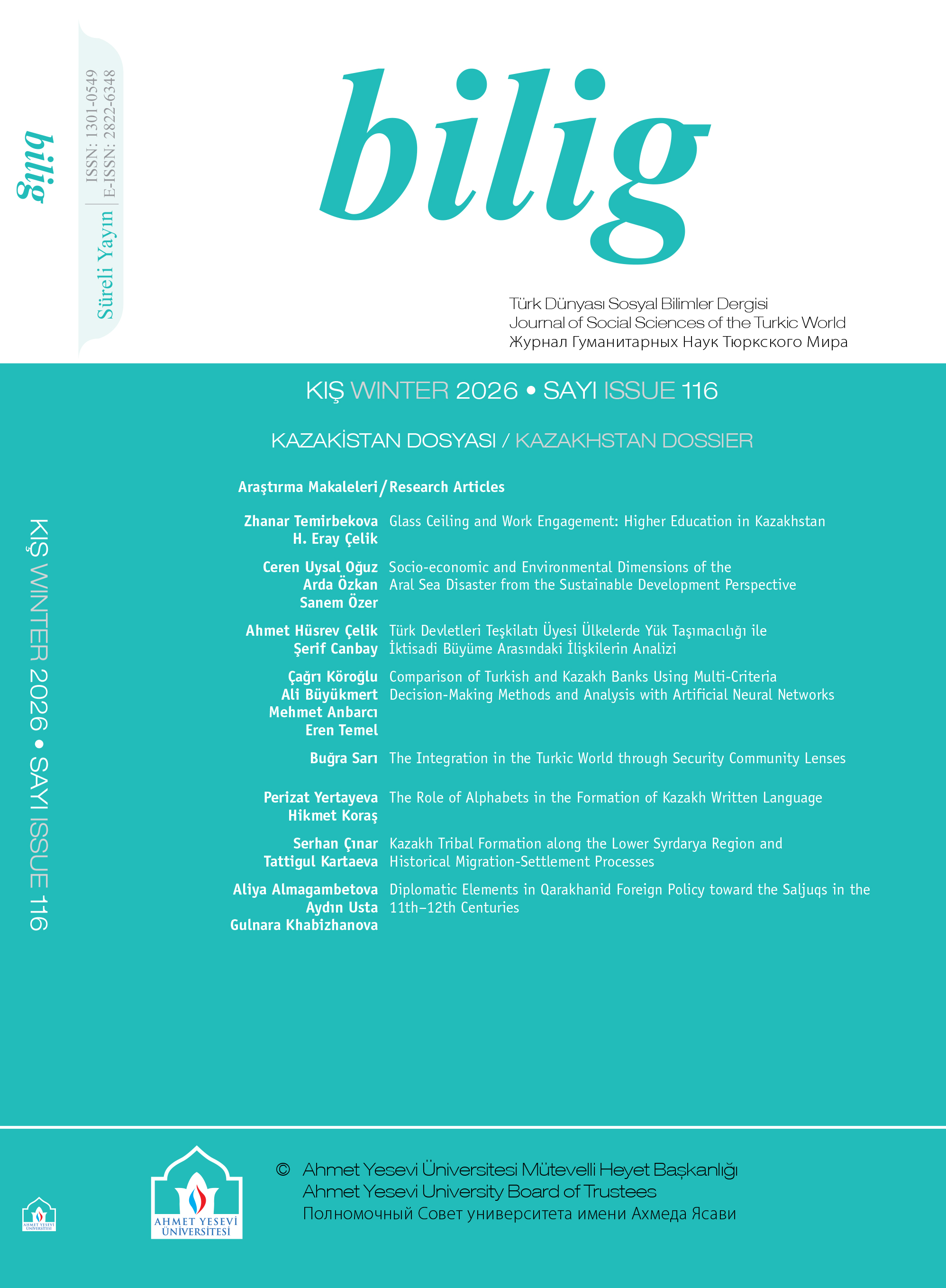
We are pleased to present our new issue, which focuses on Kazakhstan and is the result of over a year of work. This issue covers a wide range of topics from Kazakhstan's ethnic formation to its diplomatic tradition dating back to the Middle Ages, and from current financial performance analyses to environmental crises, and we believe it will be a reference source on Kazakhstan's historical heritage and current issues.
The selection of Kazakhstan, the shining star of Eurasia, as the featured topic in bilig, the academic journal of Hoca Ahmet Yesevi International Turkic-Kazakh University—the first “joint state university” of the Turkic world established through the joint will of Türkiye and Kazakhstan—aligns with our university's fundamental mission. We plan to publish special issues on the other Turkic states in the following periods.
Among the articles featured in this issue, the study titled “Kazakh Tribal Formation along the Lower Syrdarya Region and Historical Migration-Settlement Processes” examines the founding role of the Syr Darya basin, which has been home to the Scythian, Oghuz, and Kipchak tribes since ancient times, in the ethnic composition of the Kazakh people. The study titled “Diplomatic Elements in Qarakhanid Foreign Policy toward the Saljuqs in the 11th–12th Centuries”, which combines Kazakhstan's deep-rooted past with the diplomatic heritage of the Turkic state tradition, reveals the thousand-year-old roots of Kazakhstan's modern diplomacy and the current spirit of regional cooperation in the Turkic world.
The Turkistan region is currently facing serious environmental and economic challenges. The article titled “The Socio-economic and Environmental Dimensions of the Aral Sea Disaster from a Sustainable Development Perspective” analyzes the process from water policies to the climate crisis, highlighting the importance of ecological balance. The study titled “Comparison of Turkish and Kazakh Banks Using Multi-Criteria Decision-Making Methods and Analysis with Artificial Neural Networks” compares the banking sectors of the two countries using modern artificial intelligence-based methods, projecting the digital future of financial integration.
We hope that all the articles in our new issue will contribute to the development and progress of Kazakhstan, the integration of the Turkic world, and its bright future. We wish you enjoyable reading.
Prof. Dr. Fırat PURTAŞ
Editor-in-chief
Issue Details
- Issue
- 116
- Published
- Articles
- 8
- Period
- Winter 2026
Contents
8 itemsResearch Article
- pp. 1–27
-
Socio-economic and Environmental Dimensions of the Aral Sea Disaster from the Sustainable Development Perspective doi.org/10.12995/bilig.7670pp. 29–58
-
Türk Devletleri Teşkilatı Üyesi Ülkelerde Yük Taşımacılığı ile İktisadi Büyüme Arasındaki İlişkilerin Analizi doi.org/10.12995/bilig.7871pp. 59–87
-
Comparison of Turkish and Kazakh Banks Using Multi-Criteria Decision-Making Methods and Analysis with Artificial Neural Networks doi.org/10.12995/bilig.8402pp. 89–125
- pp. 127–156
- pp. 157–185
-
Kazakh Tribal Formation along the Lower Syrdarya Region and Historical Migration-Settlement Processes doi.org/10.12995/bilig.7580pp. 187–211
-
Diplomatic Elements in Qarakhanid Foreign Policy toward the Saljuqs in the 11th–12th Centuries doi.org/10.12995/bilig.8272pp. 213–232